
Marc Jacobs Handbags Authenticity Tips Style and Care Notes
Two words that look like a discount and are not
Open almost any product page on marcjacobs.com and the number sits beneath two capitalized words: SALE PRICE. Pull up a page for something at full retail and you will meet the same two words there. That is not a glitch and not a promotion, but simply how the site tags every price field, including prices that have never moved. The Canvas Medium Tote Bag, about $198 in the US store as of September 2026, wears that label at full price, while behind the page the data holds https://marcjacob.net/ a single figure with nothing to compare it against. What a real reduction looks like is two figures on a marked-down item, REGULAR PRICE and SALE PRICE, the first struck through and the second live. Remember that test if you take one thing away. Any Marc Jacobs sale that cannot show you both numbers is a template, not a markdown.
The real reductions live in MARCDOWN
The brand does run genuine sales, and it gathers them in one place under a name it clearly enjoys: MARCDOWN, one word. An old bookmark still works, since the site’s sale address redirects there. That section carried 375 products on 29 September 2026, of which 115 were bags, broken into sub-categories for Bags, Wallets, Ready to Wear, Shoes, Jewelry and Accessories, and Kids. The structure holds, but those numbers are one day’s reading and will not. Everything inside MARCDOWN displays both price lines, while anything outside it is full retail no matter how the price is labeled. If what you want is a Marc Jacobs bag sale specifically, the Bags sub-category is the page to save, since it carried nearly a third of the reduced items. That is the entire mechanic of a Marc Jacobs markdown, simpler than the site’s labeling makes it look.
The actual depth of the reductions
Since numbers beat adjectives, here are the ones verifiable on 29 September 2026, every one from a page showing both figures. The Zebra Canvas Medium Tote Bag came down from $250 to $179, about 28 percent. At near 30 percent each, the Camo Jacquard Medium Tote Bag went from $325 to $229 and the Camp Patchwork Denim Medium Tote Bag from $358 to $249, in that order. The steepest cuts landed on small bags and past-season Snapshots, with The Denim Chain Mini Bag and The Large Dual Bag both near 40 percent off, and The Jelly Snapshot dropped from $295 to $159. The Deconstructed Denim Medium and Large Tote Bags dropped from $595 to $399 and from $795 to $549, roughly a third off each. So on that date the honest band for a Marc Jacobs discount ran roughly 25 to 51 percent, and the bottom was far more common than the top. More than any single figure, one pattern matters: current-season core stock, meaning the plain canvas and leather Tote Bags, the current Snapshot and the Scene line, was not reduced.
The places worth looking, and what each one costs you
There are five places a shopper can realistically buy this brand below full price, and a sixth that keeps surfacing in search and should be ignored. Each one trades something away, whether returnability, warranty cover, selection, or your inbox. The table below is the short version; the rules behind it come from the brand’s help pages, worth reading once before a big purchase. Return terms are not uniform across these channels, which is where most people get caught out. Buy the same bag at the same price online and at an outlet and the two are not the same transaction. That difference only becomes visible when you want your money back, the worst moment to discover it.
| Where to look | What is there | What it costs you |
|---|---|---|
| A regular product page on marcjacobs.com | Every price labeled SALE PRICE, full price included | Unless a struck-through REGULAR PRICE appears beside it, not a discount |
| The MARCDOWN section | On 29 September 2026, 375 products, 115 of them bags | Older prints, materials and collaborations, not current core styles |
| Marc Jacobs retail stores in the US | A range and pricing that can differ from the site | Online orders cannot be returned in stores, and discounted in-store buys may not be returned |
| Marc Jacobs outlet stores, officially run | In the store locator, 57 of the 103 locations | Everything final sale: no returns, exchanges, repair or replacement |
| The brand’s mailing list | Sales promoted to subscribers as insider events | Nothing published in advance; you trade inbox space for notice |
| Third-party discounters and dupe sites | Prices well under verified retail | No warranty without an authorized vendor; not worth the risk |
The price adjustment clause worth learning
Almost nobody uses it, but this is the most useful piece of fine print the brand publishes. If the price of something you bought drops within 30 days of purchase, customer service will hand you a partial refund for the difference. Some conditions come attached. You get one adjustment per order rather than one per item, and the same item, in the same color and size, must still be in stock. Anything bought at a discounted sale price cannot be price-adjusted at all, and that is the clause that undercuts the whole thing. So the protection covers full-price buying and not sale buying: the shopper who pays about $325 for a current Snapshot has a 30-day safety net, and the one who takes a past-season Snapshot at $159 has none. Hold that asymmetry in mind when choosing between a current color and a reduced one.
Returning something you bought at a discount
Ordinary marcjacobs.com returns run 30 days from shipment with a free prepaid UPS label for US orders, so the brand pays return shipping. That is generous, and then the exceptions begin. In Marc Jacobs retail stores online orders cannot be returned or exchanged, and in US stores items bought at a discounted price may not be returned at all. International returns carry a fee, quoted at figures such as £16 in the UK, €20 in Europe and CAD$20 in Canada, and original shipping is not refunded. Anything marked Final Sale cannot be returned. Exchanges of no kind are offered on marcjacobs.com orders currently, so a wrong size means a return plus a fresh order. I could not verify the mechanic deciding which online sale items get tagged Final Sale and which stay returnable, so treat that as unconfirmed and read the product page before buying rather than assuming a markdown is freely returnable.
The outlet trade-off
The outlet network is bigger than most shoppers realize, and central to how this brand hands out discount. On 29 September 2026 the store locator listed 103 locations and 57 of them were outlets, so more than half the physical footprint is markdown space. The default physical Marc Jacobs store, for much of the world, is an outlet. That imbalance is stark in Europe, since the only boutique is on Regent Street in London and the rest of the European presence is outlet. The terms are blunt and stated plainly: outlet merchandise is final sale and may not be returned or exchanged, outlet items cannot be repaired or replaced, and a bag bought at a retail store or on the website cannot be returned at an outlet either. Because the storefronts look alike, that last clause catches people constantly. An outlet price is real money saved and a real set of rights given up, and only you can price that trade.
There is no published calendar, so here is a rough one
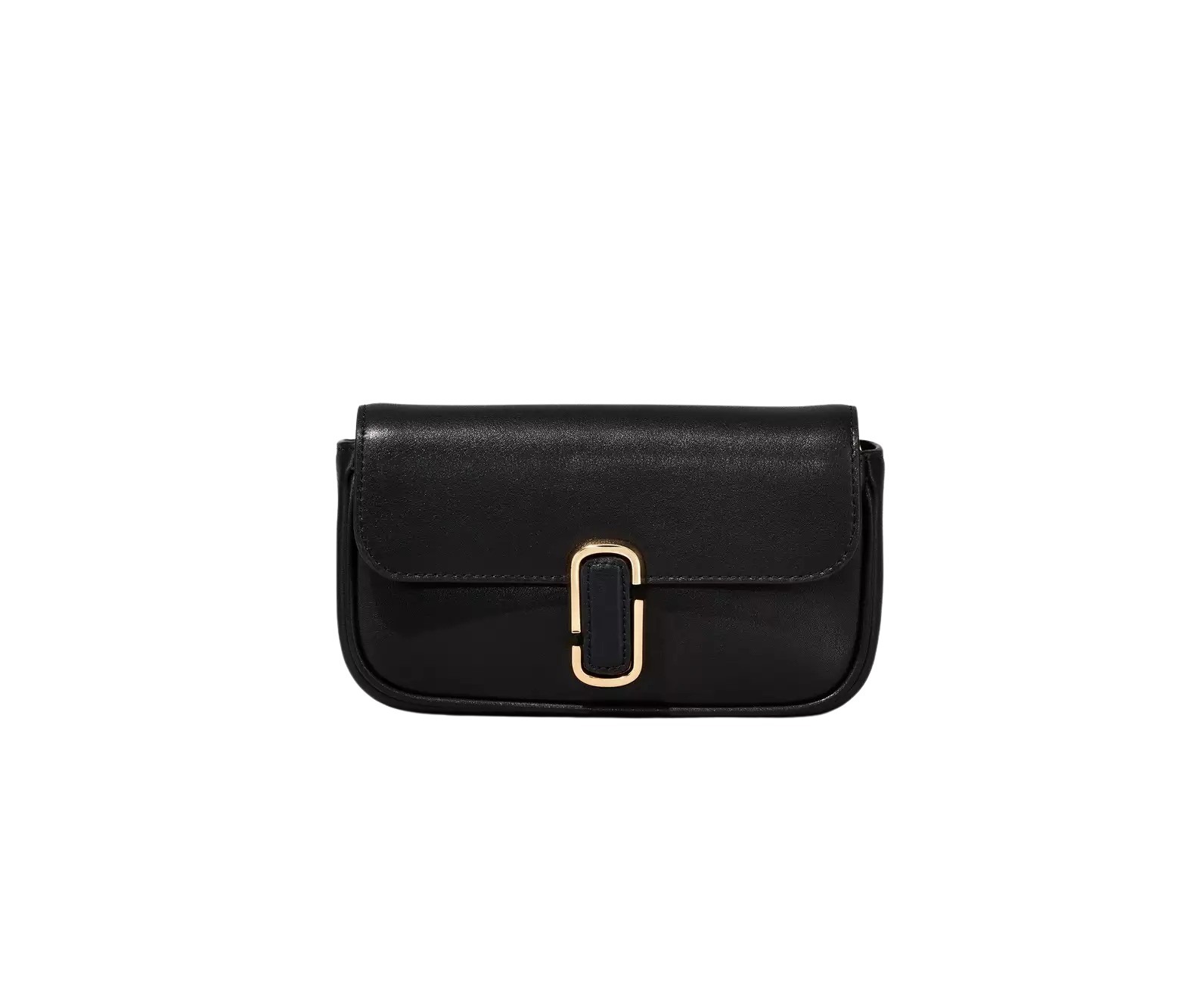
What follows is reasoning from documented behavior rather than a calendar anyone has announced, because Marc Jacobs does not publish a markdown schedule. Everything reduced in the checked sample was past-season print, material or collaboration, which makes season turnover the reliable driver and means markdowns follow new stock arriving rather than a date. The brand shows roughly once a year in early February, off the official New York Fashion Week schedule, so the weeks after new collections reach stores are the sensible moment to look. Free ground shipping in the US starts at $50 with a $9.95 charge below that, which lets a single cheap sale item quietly give back part of its own discount. Worth flagging is one structural change: as of 1 September 2026 Marc Jacobs is no longer owned by LVMH, having been acquired by WHP Global and G-III Apparel Group, with Marc Jacobs staying on as Founder and Creative Director. Nobody can tell you yet whether new ownership changes markdown behavior. A last note on spelling: many people search marc jacob sale in the singular, but the label is Marc Jacobs, and that is what the receipt will read.
